


Come in if You're not Scared!
New Games

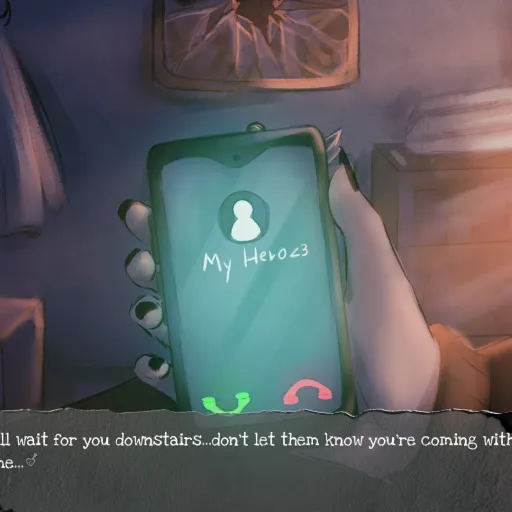










When evaluating atmospheric tension mechanics underlying modern interactive horror, casual observers often misjudge subtle psychological manipulation required. Many titles rely entirely upon cheap jump scares involving loud noises and sudden visual shocks. Come in if You're not Scared! fundamentally rejects those superficial tactics, opting instead for deep environmental paranoia generation. Surviving long nights within Come in if You're not Scared! requires players to endure intense acoustic pressure while navigating increasingly corrupted domestic geometry. Environments inside Come in if You're not Scared! actively mutate, weaponizing familiar household structures against human cognitive baselines. Players are not merely escaping monsters; players are actively wrestling against their own eroding sanity. Playing Come in if You're not Scared! demands absolute sensory focus, requiring intense acoustic tracking and stoic emotional resilience under extreme psychological duress.
Deconstructing Acoustic Paranoia Engines
Weaponizing Ambient Decibels
Audio engineering defines foundational dread layers within Come in if You're not Scared!. Because visual information remains heavily restricted by oppressive darkness, human brains naturally overcompensate using auditory processing. Come in if You're not Scared! exploits this evolutionary trait flawlessly. Background ambient noises consist of very low-frequency hums mixed with distant, unidentifiable structural shifting. These acoustic frequencies induce genuine physical unease.
Furthermore, specific threat indicators in Come in if You're not Scared! rarely announce themselves clearly. Instead of monstrous roars, players hear subtle floorboard creaks originating from empty rooms situated directly overhead. This acoustic ambiguity forces players into making terrifying assumptions. Navigating hallways inside Come in if You're not Scared! becomes grueling exercises in auditory interrogation, where distinguishing natural house settling sounds from approaching unseen predators dictates survival probabilities.
Subverting Domestic Familiarity
Horror hits hardest when invading supposedly safe spaces. Initial sequences of Come in if You're not Scared! present completely normal suburban housing layouts. Kitchens contain mundane appliances; bedrooms feature ordinary furniture. However, as nights progress, engines powering Come in if You're not Scared! begin executing subtle geometric corruptions. Hallways stretch mathematically longer than physically possible. Doors lead into rooms previously located elsewhere.
This gradual erosion of physical laws creates profound disorientation. Veteran players attempting speedruns through Come in if You're not Scared! often find their memorized mental maps entirely useless. The game intentionally gaslights spatial reasoning centers of human brains. By slowly corrupting domestic familiarity, Come in if You're not Scared! ensures players never feel secure, permanently dissolving barriers between interactive simulation and genuine psychological terror.
Come in if You're not Scared!: Tactical Specs
| System Specs | Details |
|---|---|
| Developer | Independent |
| Core Engine | Acoustic Paranoia / Geometric Corruption |
| Primary Challenge | Sensory Deprivation & Spatial Disorientation |
| Combat Mechanics | Absolute Vulnerability / Evasion Only |
Executing Evasion Protocols
Managing Movement Friction
Because combat systems do not exist here, evasion remains your sole defensive tactic. Movement controls within Come in if You're not Scared! intentionally incorporate heavy physical friction. Player character models feel sluggish, simulating realistic panic states where human legs feel weighed down by pure adrenaline. Sprinting through environments inside Come in if You're not Scared! drains stamina instantly while generating massive amounts of noise, attracting immediate lethal attention.
Optimal traversal strategies require extreme patience. Players must inch forward through shadows, pausing constantly to analyze new auditory data. Mastering movement rhythms in Come in if You're not Scared! involves synchronizing footsteps with loud environmental ambient spikes, such as distant thunderclaps or sudden wind gusts. Masking your own acoustic footprint constitutes highest skill ceilings found inside Come in if You're not Scared!.
"Biggest mistakes novices make in Come in if You're not Scared! involves staring directly into dark corners. Engines track camera vectors. Looking directly at manifestations accelerates sanity drain rapidly. You must learn to navigate using peripheral vision exclusively."
Exploiting Blind Spots
Hostile entities hunting players rarely rely on direct line-of-sight visual algorithms. Instead, pursuers in Come in if You're not Scared! utilize localized proximity grids. If players breach specific geometric thresholds, unseen entities manifest instantly. Memorizing safe zones becomes critical. Closets and under-bed spaces provide temporary physical barriers, but remaining stationary too long invites targeted investigations.
Advanced tactical evasion requires predicting patrol vectors. When unseen entities enter nearby rooms, algorithms in Come in if You're not Scared! generate specific breathing audio cues. By triangulating these sounds, players can calculate exact spatial coordinates of invisible threats, slipping through doorways mere seconds before entities cross thresholds.
- Peripheral Navigation: Keep your reticle aimed slightly downward toward floorboards in Come in if You're not Scared! to avoid triggering direct-gaze penalty mechanics.
- Acoustic Masking: Use natural environmental sounds to cover your footsteps. Never run across wooden surfaces during silent ambient lulls inside Come in if You're not Scared!.
- Spatial Mapping: Continuously memorize spatial relationships between exits, as architecture within Come in if You're not Scared! will actively attempt to sever your mental maps.
Psychology of Environmental Dread
Overcoming Proximal Anxiety
First-person perspectives inherently generate immense proximal anxiety during horror experiences. Because players cannot observe areas directly behind their avatars, Come in if You're not Scared! intentionally utilizes directional audio cues originating directly behind virtual cameras. This forces players into constantly turning around, generating nauseating cycles of perpetual paranoia.
True competitive dominance demands stoic emotional control. Players must accept proximal vulnerability as immutable environmental constants rather than impending death sentences. By focusing entirely on forward progression and maintaining strict acoustic discipline, veterans mitigate impact of paranoia. Come in if You're not Scared! rewards cold, calculated spatial planning while brutally punishing emotional panic reactions.
A Masterclass in Atmospheric Tension
Ultimately, Come in if You're not Scared! proves that profound terror thrives within subtle psychological manipulation rather than explicit visual gore. By combining restrictive evasion mechanics with aggressive acoustic hunting algorithms, developers created highly compelling digital tension zones. Engines in Come in if You're not Scared! perfectly simulate ruthless nature of unseen predators, demanding players balance defensive patience with terrifying forward exploration.
For players willing to embrace absolute vulnerability, Come in if You're not Scared! offers fiercely intelligent psychological challenges. Interplay between acoustic mapping, dynamic geometric corruption, and strict visual discipline solidifies Come in if You're not Scared! as elite tier entries within modern browser-based horror genres.
Frequently Asked Questions about Come in if You're not Scared!
Why do my controls suddenly feel incredibly heavy and unresponsive?▼
Can I fight back or locate any defensive weapons?▼
Is it possible to memorize map layouts for faster runs?▼
Looking for more frights? Browse our scary games online for the full horror collection.