

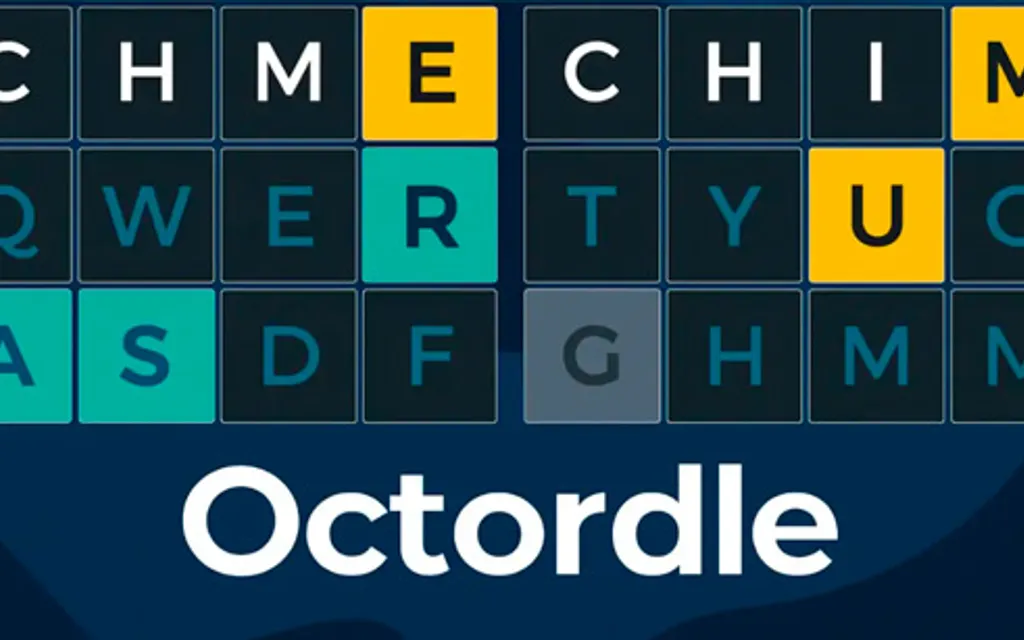
Octordle
New Games








When evaluating underlying logic structures powering Octordle, casual puzzle fans often drastically underestimate sheer mathematical complexities involved. While basic mechanics mimic popular single-grid word games, Octordle multiplies cognitive loads exponentially by forcing players to solve eight simultaneous matrix grids using only thirteen total guesses. Octordle is not merely about testing vocabulary limits; it operates as rigorous concurrent deduction simulators demanding intense probability management. Every single keystroke inputted into Octordle creates massive informational cascades across all eight isolated boards. Success requires abandoning linear single-target thinking entirely. Winning consistently in Octordle demands calculating optimal vowel elimination strategies, managing overlapping informational resources, and ruthlessly sacrificing individual grids temporarily to secure global matrix victories.
Deconstructing Concurrent Deduction Matrices
Mastering Vowel Elimination Algorithms
Opening moves dictate entire success rates within Octordle. Using basic starter words containing duplicate letters mathematically cripples your informational gathering efficiency. High-level tactical approaches in Octordle require deploying highly specific algorithmic sequences designed exclusively to expose all five major vowels across initial turns. By burning first two guesses on vowel-dense combinations, players forcibly extract critical structural data from all eight hidden targets simultaneously.
Once vowel positions become exposed, solving individual boards in Octordle transitions from blind guessing into pure deductive logic. Knowing exactly where vowels sit allows human brains to eliminate thousands of impossible consonant combinations instantly. Veterans of Octordle never attempt solving specific grids during early phases; veterans treat first three inputs purely as sacrificial reconnaissance missions, intentionally ignoring green letters on specific boards to ensure maximum yellow letter distribution across global matrices.
Managing 13-Turn Economies
Resource scarcity defines structural friction found within Octordle. Players must decode eight targets using exactly thirteen attempts. Mathematically, this means players possess only five "free" exploratory guesses before entering strict 1:1 solve ratios. Wasting guesses attempting to secure single difficult boards in Octordle often guarantees failure across remaining unsolved grids. Turn economy management requires absolute ruthless discipline.
If specific grids fall into dangerous anagram traps—where multiple valid words fit identical remaining blanks—advanced players immediately abandon those boards. Guessing blindly between similar variations wastes irreplaceable turns. Instead, optimal strategies in Octordle involve identifying completely unrelated boards featuring guaranteed known solutions. Inputting those guaranteed solutions often serendipitously reveals critical missing consonants needed to break anagram traps residing on abandoned grids. Cross-pollination of data represents core genius behind Octordle.
Octordle: Tactical Engine Specs
| System Specs | Details |
|---|---|
| Developer | Kenneth Crawford |
| Core Engine | Concurrent Logic Matrix / Deductive Elimination |
| Primary Challenge | Information Overlap & Resource (Turn) Scarcity |
| Failure State | Exhausting 13 Input Operations Prematurely |
Executing Aggressive Information Trapping
Weaponizing Burner Inputs
Mid-game scenarios in Octordle frequently present situations where three separate grids remain unsolved, yet only four turns remain available. Attempting direct solves during these critical junctures invites statistical disaster. Elite players utilize tactical burner inputs. Burner inputs involve intentionally submitting complete nonsense words comprised entirely of untested consonants. While burner inputs guarantee zero direct solves, they mathematically force engines in Octordle to verify status of five new letters simultaneously.
Executing perfect burner inputs requires deep systemic analysis. You must cross-reference missing letters across all remaining unsolved boards, constructing Frankenstein combinations designed purely to extract maximum binary data. Spending one turn gathering data often guarantees three rapid-fire consecutive solves immediately afterward. Understanding when to sacrifice turns intentionally separates true logic masters from lucky guessers attempting Octordle.
"Biggest mistakes novices make in Octordle involves experiencing tunnel vision. Fixating on solving board number one while ignoring boards two through eight destroys overall turn efficiency. Always scan all eight matrices simultaneously after every single input operation. Answers often hide where you least expect them."
Exploiting Consonant Clusters
English vocabulary relies heavily on specific structural clusters (like 'CH', 'SH', 'ST', 'TH'). Identifying these clusters early provides massive advantages. When yellow indicator squares hint at these specific letters, aggressive algorithms in Octordle allow players to lock down structural skeletons instantly. Pinning down structural skeletons reduces mathematical permutations from thousands down to single digits.
Advanced tactical execution in Octordle involves hunting these specific clusters during opening phases. If you confirm 'S' and 'T' exist on multiple grids, subsequent guesses must actively test their adjacency. Placing them together intentionally tests multiple prefix combinations simultaneously. Exploiting linguistic geometry transforms Octordle from random dictionary searches into highly structured cryptographic decoding operations.
- Dual-Vowel Starters: Always begin sessions in Octordle using two completely distinct inputs covering 'A', 'E', 'I', 'O', 'U', plus 'Y'. Securing vowel locations solves fifty percent of internal puzzles immediately.
- Scrolling Discipline: Never input guesses without physically scrolling down to analyze bottom four grids. Information located on grid eight frequently alters decisions made regarding grid one.
- Anagram Avoidance: If targets resemble words ending in 'IGHT', immediately deploy burner inputs testing 'F', 'L', 'M', 'N', 'R', 'S' simultaneously. Never guess them individually in Octordle.
Psychology of Concurrent Processing
Overcoming Cognitive Overload
Because visual arrays display forty distinct letter squares simultaneously, Octordle inherently generates immense cognitive overload. Human brains naturally struggle maintaining eight separate logical threads simultaneously. Octordle intentionally leverages this friction, causing fatigued players to input completely invalid duplicate letters or miss blatantly obvious solutions staring directly back at them.
True competitive dominance in Octordle demands rigorous visual filtering techniques. Players must train human eyes to ignore grey eliminated squares completely, focusing neurological bandwidth exclusively on highlighting yellow and green data points. By compartmentalizing visual processing, veterans mitigate mental fatigue. Octordle rewards cold, calculated data parsing while brutally punishing impulsive emotional guessing.
A Masterclass in Cryptographic Logic
Ultimately, Octordle proves that profound deductive depth scales beautifully when subjected to extreme parallelism. By multiplying standard formulas by eight, developers created highly complex digital interrogations. Engines in Octordle perfectly simulate ruthless logic required during cryptographic decryption, demanding players balance broad exploratory data gathering with precise surgical executions.
For players willing to embrace massive mental gymnastics, Octordle offers fiercely intelligent intellectual challenges. Interplay between statistical probability, linguistic structure, and strict turn economics solidifies Octordle as absolute elite tier entries within modern browser-based puzzle genres.