

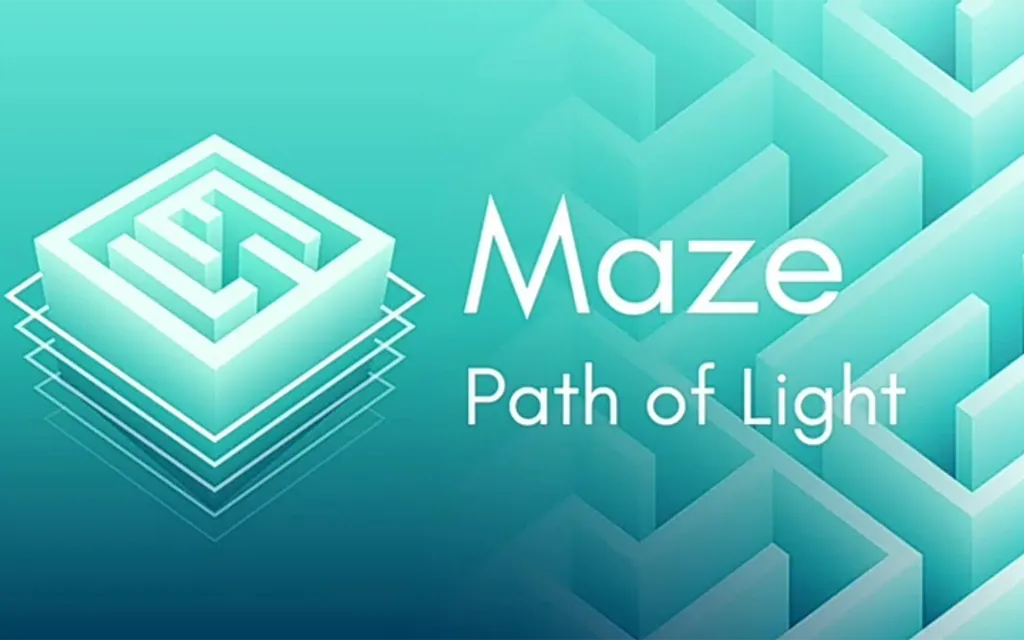
Maze: Path of Light
New Games










The aesthetic presentation of Maze: Path of Light is intentionally soothing, utilizing soft neon glows and ambient soundscapes to lower your guard. However, beneath this relaxing exterior lies a rigorous, mathematically strict pathfinding engine. The core mechanic forces you to trace a single, unbroken beam of energy through increasingly complex architectural labyrinths. Every intersection in Maze: Path of Light presents a binary choice, and a single wrong turn commits you to a dead end that demands immediate backtracking.
Entering the Neon Labyrinth
The Mechanics of the Beam
When you initiate a puzzle in Maze: Path of Light, you are not controlling a character; you are guiding a continuous stream of kinetic energy. The beam must flow from the origin node to the extraction point without breaking its sequence. The engine of Maze: Path of Light restricts your movement exclusively to the pre-rendered geometric channels, meaning you cannot take shortcuts across the negative space in Maze: Path of Light.
The fundamental challenge is spatial visualization. Because the camera is often zoomed in on your current position, you cannot see the entire grid at once. You must mentally map the layout of the labyrinth as you explore it in Maze: Path of Light. Dragging the beam in Maze: Path of Light down a long corridor only to discover it terminates in a solid wall requires you to physically trace the light back to the last viable intersection, burning valuable mental energy.
This mechanical reliance on memory separates Maze: Path of Light from simple casual games. You are effectively building a mental cartography of the dead zones. If you hit a dead end, you must flag that specific node in your mind as toxic, ensuring you do not repeat the exact same routing error on your second attempt through the sector in Maze: Path of Light.
Navigating the Intersections
The complexity of a level is defined entirely by its node density. Early stages feature simple bifurcations—a single fork in the road. Late-game stages in Maze: Path of Light introduce massive central hubs where five or six different corridors converge simultaneously. Choosing the correct exit vector from a multi-node intersection requires deep logical deduction rather than blind guessing.
To solve these dense hubs in Maze: Path of Light, you must look for structural tells in the labyrinth walls. Often, a path that curves sharply back toward the origin point is a deliberate trap designed by the developer to waste your time. Conversely, a path that seems to run parallel to the outer boundary of the grid is frequently the critical path required to reach the exit node in Maze: Path of Light.
"The biggest mistake players make in Maze: Path of Light is rushing the intersections. Do not just swipe wildly. Pause at every junction, look at the thickness of the adjoining walls, and try to deduce which corridor is a closed loop and which one actually leads toward the exit quadrant."
Mastering the Geometry of Deception
The Illusion of Progress
The level designers of Maze: Path of Light employ a specific psychological trick known as the 'false straightaway'. The game will present you with a massive, unobstructed corridor that feels incredibly satisfying to trace. However, these long, easy paths almost always lead directly into the deepest, most complex dead ends on the board. The engine of Maze: Path of Light punishes players who choose the path of least resistance.
To truly master the routing in Maze: Path of Light, you must actively seek out the friction. The correct path is usually the one that requires the most turns, the most zigzagging, and the most deliberate navigation. If a route feels too smooth or too obvious, the algorithm is likely baiting you into a geometric trap.
- False Straightaways: Long, easy corridors in Maze: Path of Light that inevitably terminate in hard walls.
- Friction Routing: The jagged, complex pathways that usually contain the actual solution to the grid.
Overlapping Pathways
As you progress into the advanced tiers, the 2D plane begins to simulate 3D depth. The labyrinths introduce overpasses and tunnels, meaning two paths can cross each other visually without actually intersecting mathematically in Maze: Path of Light. This completely shatters your ability to rely on simple 2D line-following logic.
When dealing with overlapping geometry in Maze: Path of Light, you must carefully track the shadowing and layer priority of the neon tracks. A beam traveling on the upper bridge cannot suddenly drop onto the lower track. You must route your light specifically to the ramp nodes that connect the different elevation layers, adding a massive layer of vertical complexity to the pathfinding equation in Maze: Path of Light.
- Bridge Nodes: Allow the beam in Maze: Path of Light to safely cross over existing geometry without merging.
- Ramp Nodes: The only mathematical points where elevation can be altered in Maze: Path of Light.
Analyzing the Visual Indicators
Reading the Ambient Glow
Because the camera obscures the exit point, you must rely on environmental clues to orient yourself. The extraction node emits a faint, pulsing aura that subtly illuminates the walls of the maze in its immediate vicinity. By analyzing the intensity of this ambient glow in Maze: Path of Light, you can triangulate the general direction of the goal, even if the direct path is hidden.
If you are tracing a path and the ambient lighting begins to dim, you are moving away from the objective. This visual feedback loop is critical for recognizing a dead end early in Maze: Path of Light. Instead of following the wrong corridor to its physical conclusion, you can abort the route the moment the environmental lighting shifts, saving immense amounts of backtracking time.
| System Specs | Details |
|---|---|
| Developer | InfinityGames |
| Release Year | 2022 |
| Genre | Logic Puzzle |
| Core Interaction | Spatial Pathfinding & Routing |
Managing Input Precision
The touch controls require a continuous drag motion to guide the beam in Maze: Path of Light. The engine is highly sensitive to diagonal drift. If you attempt to turn a corner too sharply in Maze: Path of Light, the input parser may register it as an attempt to breach a solid wall, momentarily stalling the light stream and breaking your flow state.
To maintain optimal speed in Maze: Path of Light, you must execute clean, 90-degree swipes at the exact center of the intersections. Over-steering or under-steering will cause the beam in Maze: Path of Light collision box to scrape against the labyrinth walls, bleeding off momentum. Perfect input hygiene is required to achieve the smoothest possible clear times.