

Subway Run
New Games












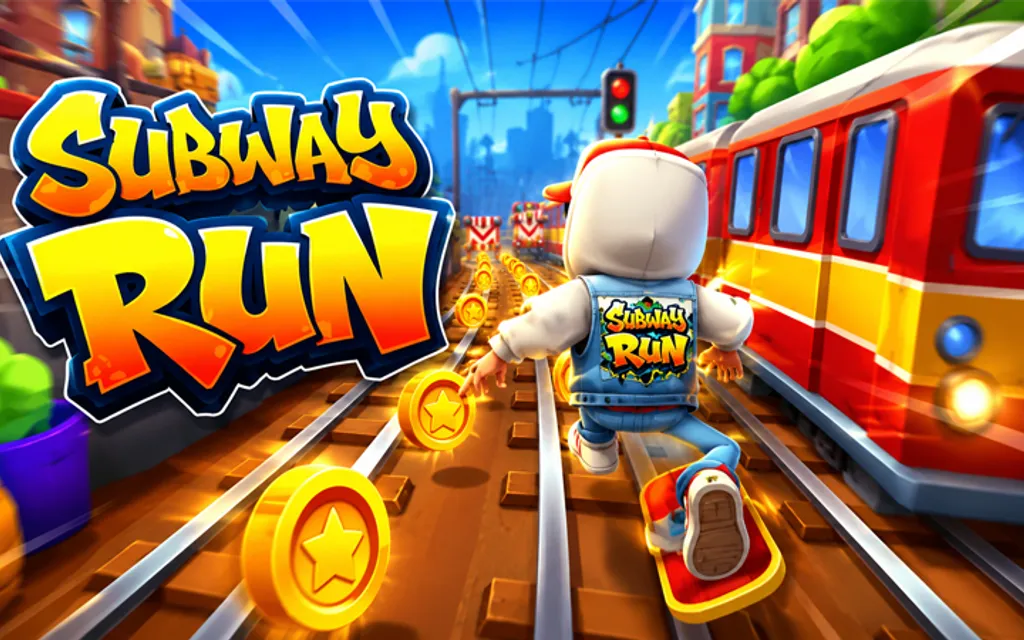
Subway Run strips away complex combat mechanics, thrusting players directly into highly aggressive kinetic environments. Surviving inside this endless escape demands pristine reflex management and ruthless obstacle execution. Players must actively exploit the subway architecture, transforming chaotic tunnel systems into calculated safe zones. Playing Subway Run effectively requires embracing intense visual velocity while avoiding direct collisions. Every successful run depends entirely on your ability to predict incoming trains.
Deconstructing Endless Kinetic Evasion
Mastering Lane Displacement Mechanics
Standard arcade titles utilize basic horizontal movement variables. Subway Run fundamentally alters traversal math by introducing permanent forward momentum. Navigating the dark subway corridors demands constant attention. Controlling exploration trajectories requires manipulating your lane position under extreme pressure. Holding defensive hoverboards reduces your vulnerability, while missing a jump accelerates your crash toward unseen subway barriers. Your run can end in an instant if you fail to react.
Executing perfect evasive maneuvers transforms random swiping into precise logistical routing. Algorithms powering Subway Run calculate danger metrics using absolute velocity constraints. Veteran players pulse their lane swaps rhythmically without ever completely losing control, linking unbroken jump combos that mathematically guarantee a high-scoring run. Sustaining these unstable kinetic states separates true evasion masters from casual players exploring the subway.
Weaponizing Peripheral Speed Transfer
Unlike simplistic action titles rewarding aggressive engagements, this arcade challenge actively encourages silent evasion acrobatics. Sprinting across the subway platforms generates massive visual speed. Surviving long runs requires understanding rigid-body momentum propagation. Reacting quickly decreases your audible drag profiles, allowing you to slice through digital subway carriages smoothly. Controlling movement velocity determines your survival probability against unpredictable train arrivals on every single run.
Defensive maneuvering involves reading invisible procedural spawning arcs. Because collisions generate massive friction upon touchdown, landing perfectly flat transfers aerial momentum directly into ground speed. Performing successful kinetic transfers requires learning exact subway hitbox physics. Every stationary carriage acts as a potential terminal wall capable of ending your run. Precision momentum transfer constitutes foundational meta-strategies governing high-level play.
Subway Run: Tactical Engine Specs
| System Specs | Details |
|---|---|
| Developer | Independent |
| Core Engine | Kinetic Swiping / Momentum Drain |
| Primary Challenge | Reflex Control & Obstacle Evasion |
| Traversal Mechanics | Lane Shifting / Velocity Manipulation |
Executing High-Velocity Survival Protocols
Analyzing Procedural Train Generation
Subway layouts generate dynamically using complex geometric algorithms. However, engines do not place obstacles entirely randomly. As distance metrics increase, internal difficulty directors actively reduce safe navigable lanes. Early stages of your run feature wide clearance zones populated by gentle coin curves. Deep runs inside the subway system introduce massive locomotive walls, shifting barrier speeds, and dynamic aerial barricades.
High-level routing involves advanced trajectory recognition. While track patterns generate procedurally, algorithms piece together predetermined hazardous formations. Veterans memorize these specific choke-point configurations instantly upon spotting moving headlights in the subway. Recognizing complex double-train blockade patterns allows players to preemptively execute specific vertical macro-commands, completely bypassing reactionary processing phases that cost crucial invincibility frames during a fast run.
"Biggest mistakes novices make in the subway involve watching the immediate foreground continuously. Focusing on nearby obstacles guarantees delayed reaction times mid-run. Always elevate your gaze rhythmically to maintain distant architectural awareness while executing immediate muscle memory swiping."
Optimizing Peripheral Velocity Awareness
Visual processing determines ultimate survival limits. At extreme speeds, focusing on immediate foreground subway barriers guarantees destruction. The game mathematically forces players to elevate their gaze toward distant track horizons. By analyzing distant pixel clusters before fully forming into solid train geometry, human brains can calculate optimal lateral displacement angles milliseconds earlier to extend the run.
This technique requires trusting peripheral vision entirely to handle immediate foreground dodging. Elite players treat the subway environment as atmospheric logic puzzles. While central focus remains locked on distant procedural generation horizons, subconscious muscle memory handles close-quarters lane sliding. Disconnecting central vision from immediate threats constitutes foundational survival mechanics required for deep high-score runs.
- Mid-Air Vectoring: Intentionally swipe down during long jumps. Maintaining aerodynamic profiles provides maximum falling velocity, allowing instant kinetic conversion upon striking flat subway concrete smoothly during your run.
- Multiplier Quarantine: Refuse burning hoverboards when traveling through simple straightaways. Let raw reflexes handle basic obstacle avoidance organically to force shield conservation routines into natural isolation manually.
- Geometry Testing: Swipe laterally early before committing fully. Visual processing often misses subtle subway barrier hitboxes engineered specifically to destabilize evasion arcs mid-run.
Psychology of Geometric Intimidation
Overcoming Speed Induced Panic
Because the subway system features infinite velocity limits, engines guarantee eventual player destruction upon broken concentration. As reaction windows shrink, cognitive processing buffers eventually overflow. Recognizing this inevitable terminal speed state frequently induces subconscious panic. Players begin swiping randomly, abandoning geometric deduction unnecessarily, and making rigid, jerky adjustments leading directly toward the end of their run.
True competitive dominance demands stoic emotional detachment. Players must accept exponential speed as immutable kinetic facts. By focusing entirely on maintaining fluid swiping rhythms and ignoring escalating frustration metrics, veterans mitigate panic impact. Escaping the subway rewards cold, calculating spatial planning while brutally punishing emotional jerking during any run.
A Masterclass in Reflex Execution
Ultimately, the digital dash proves that profound mechanical depth thrives within conceptually simple endless frameworks. By combining complex lane logic constraints with aggressive locomotive generation, developers created highly compelling digital gauntlets. Engines perfectly simulate ruthless pursuit pressure, demanding players balance precise swipe parsing with extreme abstract visual anticipation to survive the subway run.
For players seeking pure reflex challenges demanding zero narrative distractions, Subway Run offers fiercely intelligent execution tests. Interplay between simulated kinetic traps, dynamic track rendering, and strict angular discipline solidifies it as an elite tier entry within modern browser-based runner genres.