

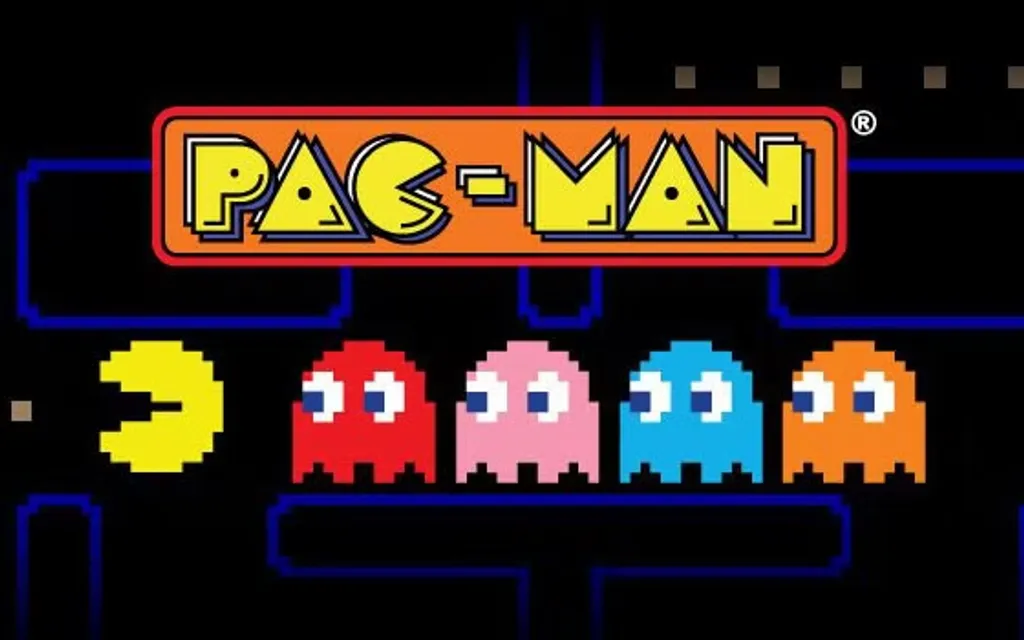
Pac-Man
New Games







The fundamental mechanic of Pac-Man is absolute claustrophobia. You are trapped in a static, neon-lit labyrinth with zero defensive capabilities, relying entirely on input precision and pathfinding to survive. The failure state is inevitable if you stop moving; every second spent hesitating allows the four persistent Pac-Man AI entities to close the distance and end your run. Playing Pac-Man means embracing constant panic.
Navigating The Neon Death Trap
The Geometry of Evasion
Mastering the grid in this Pac-Man arcade classic requires understanding the exact pixel boundaries of the Pac-Man maze. Your yellow avatar must continuously eat the scattered Pac-Man dots to progress, but doing so slightly reduces your movement speed. This creates a terrifying dynamic where clearing the Pac-Man board actively makes you more vulnerable to the encroaching threat. You are physically slower when consuming the map than you are when moving through an empty Pac-Man corridor.
The corners of the Pac-Man map are particularly lethal. Turning a corner tightly requires inputting the directional command slightly before you reach the intersection, a technique known as cornering. Failing to execute this frame-perfect turn means losing valuable distance. It is not just about choosing the right path, but navigating that path with mechanical perfection.
Every single grid square is a calculation of risk. Because you are constantly tracked by the Pac-Man AI, moving into a long corridor without an immediate exit is essentially a death sentence. The physical limitations of your movement mean you cannot simply outrun your pursuers; you must out-navigate them using the geometry of the Pac-Man environment itself.
Exploiting the Tunnel System
On the left and right edges of the screen, you will find a wraparound tunnel. Passing through this tunnel instantly teleports you to the opposite side of the board. More importantly, it drastically slows down any pursuer attempting to follow you through it, altering their movement variables the moment they enter the boundary.
This tunnel is your only reliable escape valve. When the pressure mounts and all four paths are blocked, baiting your enemies toward the tunnel entrance before slipping through is a mandatory Pac-Man survival tactic. The Pac-Man engine explicitly punishes the Pac-Man AI for using this route, giving you the exact frame advantage needed to reset the board state.
"The real trick is treating the dots not as points, but as a speed penalty. You have to balance clearing the safe zones with managing your distance from the pursuers. The tunnel isn't just an exit; it's a tool to actively cripple the AI's momentum."
Decoding the Four AI Personalities
The Aggressor and the Ambusher
The genius of Pac-Man lies in its varied algorithmic threat model. The red entity, Blinky, is programmed to aggressively track your exact position. His behavioral tree is a direct vector calculation; he constantly checks your coordinates and moves to minimize the distance. As the Pac-Man round progresses and dots are consumed, his speed multiplier increases, forcing you into a constant state of panic.
Conversely, the pink entity, Pinky, does not chase you directly. Instead, her Pac-Man code attempts to predict where you are going by targeting a space four tiles ahead of your current direction. This pincer movement means running away from the red threat often leads you straight into the trap laid by the pink one. They are designed by the Pac-Man developers to corner you mechanically.
- Blinky (Red): Direct coordinate pursuit. Implements dynamic acceleration based on the remaining dot count threshold.
- Pinky (Pink): Predictive ambush logic. Calculates intercept vectors based on your current directional input.
The Unpredictable Elements
The blue entity, Inky, has the most complex behavioral tree. His target tile is calculated using a double-variable equation: it takes your current position, projects a line, and then uses Blinky's position to draw a secondary vector. This dual-variable tracking makes his movements erratic and nearly impossible to predict in the heat of the moment, as his Pac-Man path depends on the location of another entity.
Finally, the orange entity, Clyde, operates on a strict distance threshold. He will chase you directly until he gets within an eight-tile radius, at which point his Pac-Man programming forces him to immediately retreat to his designated corner. Understanding this proximity trigger is essential for manipulating his movement pattern; you can actively push him away by moving closer.
- Inky (Blue): Multi-variable vector tracking. His aggression scales with the positioning of the red entity.
- Clyde (Orange): Proximity-based retreat mechanic. Operates on a strict eight-tile exclusion zone.
The Geometry of Perfect Patterns
The Concept of Grouping
High-level play completely abandons reaction-based evasion in favor of strict pattern execution. Because the Pac-Man AI behaviors are entirely deterministic, inputting the exact same sequence of movements from the start of the Pac-Man round will always result in the exact same AI response. This allows Pac-Man players to map out absolute safe routes that clear the board with zero risk of interception.
Grouping involves manipulating the AI into clumping together. By looping around a central structure, you can force the direct pursuer and the predictive ambusher to merge their pathfinding, effectively turning two distinct Pac-Man threats into a single, manageable entity. This reduces the number of variables you have to track on the screen.
Executing a perfect pattern requires relentless memorization. Missing a single dot or hesitating for a fraction of a second desynchronizes the entire sequence. The Pac-Man AI will immediately adapt to your positional error, breaking the pattern and forcing you back into reactionary survival mode. The margin for error is measured in pixels and frames.
Adapting to RNG Interruptions
While the core Pac-Man mechanics are deterministic, the transition between levels introduces slight timing variations. The speed multipliers reset and scale differently, meaning a pattern that works perfectly on level one will result in a fatal collision on level three. You must adapt your Pac-Man routing dynamically based on the current mathematical constraints of the engine.
Furthermore, the Pac-Man game engine operates on a global timer that cycles between two distinct AI modes: Chase and Scatter. Every few seconds, the entities are programmed to stop pursuing you and instead path towards their designated home corners. The exact moment this mode switch happens forces them to immediately reverse their current direction.
The Turning of the Tide
The Power Pellet Mechanic
Located in the four corners of the Pac-Man map are larger, glowing orbs. Consuming one of these triggers the game's only offensive window. The environment flashes, the pursuers turn dark blue, and their movement speed plummets dramatically. Their Pac-Man pathfinding code is also overwritten, forcing them to move randomly away from your current position rather than tracking you.
During this brief vulnerability phase, you can actively consume the entities to clear them from the board temporarily. This not only provides a massive score boost but also resets their positioning to the central ghost house, giving you crucial seconds to clear the remaining dots without harassment. It flips the hunter-prey dynamic instantly.
| System Specs | Details |
|---|---|
| Developer | Namco |
| Release Year | 1980 |
| Genre | Maze Arcade |
| Core Interaction | Grid Navigation |
Managing Resource Depletion
The most dangerous moments occur when only a few dots remain. These stragglers are often located in high-traffic areas in Pac-Man, requiring you to carefully lure the AI away before making a frantic dash to grab the final pieces. The board state becomes increasingly hostile in Pac-Man as your routing options are severely limited.
You must ensure you do not consume all four corner orbs too early in the Pac-Man round. Saving at least one orb for the final, chaotic cleanup phase is a critical Pac-Man resource management strategy. If you exhaust your offensive options prematurely in Pac-Man, you will be cornered in a quadrant with no way to force the AI to retreat, guaranteeing a failure state.
The Mathematics of the Fruit Spawns
Understanding the Point Thresholds
Below the central ghost house in Pac-Man, a fruit item will spawn twice per level based on the number of dots you have consumed. The first item triggers after 70 dots in Pac-Man, and the second triggers after 170 dots. These items remain on the Pac-Man board for exactly nine to ten seconds before despawning.
The point value of these items scales aggressively as you advance through the Pac-Man levels, starting at a mere 100 points for the cherry and culminating in 5,000 points for the key. Collecting these items is mandatory for achieving high scores in Pac-Man, but doing so forces you to break from your optimal defensive routing.
The spawn location is strategically placed in the center of the Pac-Man board, which is the most dangerous intersection. To collect the fruit in Pac-Man, you must actively dive into the area where all four AI pathfinding routines naturally converge, creating a massive risk-reward scenario.
Risk vs Reward Mechanics
Diverting from your established pattern to grab a despawning fruit is the primary cause of run-ending mistakes in Pac-Man. The engine baits you into sacrificing your positional advantage in Pac-Man for a temporary score boost. You must calculate whether the distance required to reach the center is viable given the current distribution of the Pac-Man AI entities.
If the red entity is actively accelerating and closing the gap in Pac-Man, abandoning a safe corridor to dive for a fruit is a mathematical error. Survival must always take precedence over score maximization in the late game of Pac-Man, as the loss of a life resets your momentum and forces you to clear the remaining board from a cold start.