

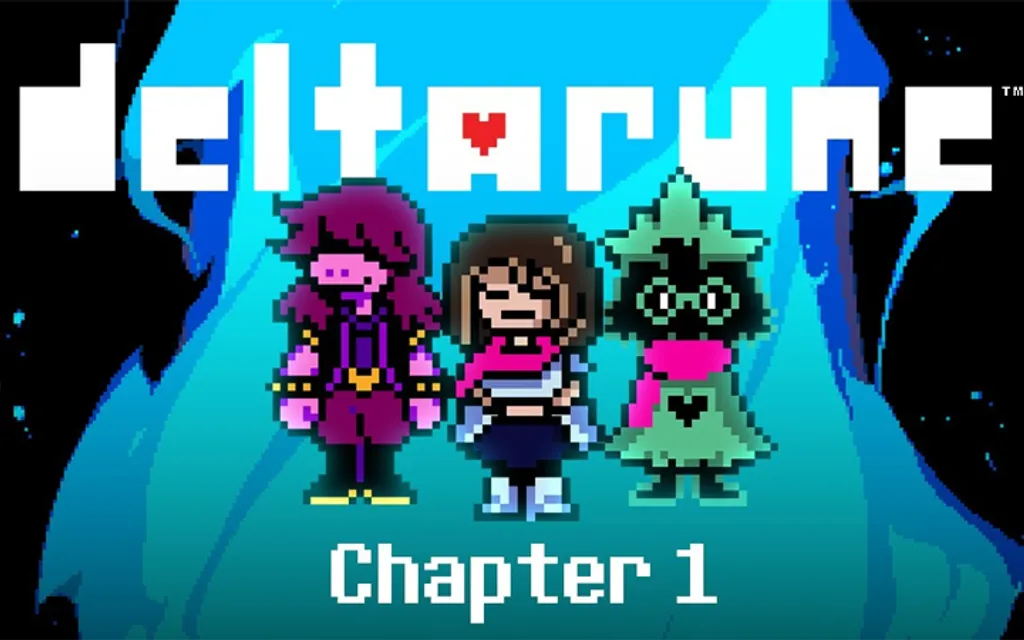
Deltarune: Chapter 1
New Games







When analyzing mechanical structures of Deltarune: Chapter 1, it becomes immediately apparent that Toby Fox has actively subverted traditional RPG formulas. Most role-playing games separate narrative choices from core combat loops, relying heavily on static menus and passive stat checks. Deltarune: Chapter 1 aggressively tears down this barrier. It forces players into hybrid states of constant, high-pressure engagement. Combat engines here are not merely numbers games; they are meticulously crafted strategic sandboxes that blend frantic hitbox evasion of bullet-hell arcade games with rigorous resource management of tactical simulators. Every single encounter is a puzzle that demands absolute mastery over unique mechanics. You are not just mashing attack buttons; you are actively calculating risk margins, managing tension economies, and solving dynamic logic gates under heavy fire.
Deconstructing Hybrid Combat Engines
Dangers of Bullet-Hell Grazing
Defensive phases are defining features of combat in Deltarune: Chapter 1. Unlike traditional turn-based games where you simply absorb incoming damage based on your armor stats, Deltarune: Chapter 1 forces your "soul"—represented by a tiny red heart—into constrained boxes to physically dodge enemy projectiles in real-time. This mechanic alone significantly raises skill ceilings. However, true brilliance of its engine lies in "Grazing" mechanics. Grazing in Deltarune: Chapter 1 requires players to intentionally pilot their souls extremely close to lethal projectiles without actually taking direct hits.
This creates deeply terrifying risk-reward loops within Deltarune: Chapter 1. If you play defensively and hug far walls of evasion boxes, you will likely survive, but your party will stagnate. To generate resources necessary to win efficiently in Deltarune: Chapter 1, you must play with extreme aggression during defensive phases. You must actively bait enemy bullet patterns, riding absolute pixel edges of their hitboxes. Successful grazes in Deltarune: Chapter 1 reward you with Tension Points, but micro-miscalculations result in devastating physical damage to your party members. Constant pressure turns every enemy turn in Deltarune: Chapter 1 into high-stakes gambling scenarios.
Mastering Tension Point (TP) Economies
Tension Points, or TP, are lifeblood resources for your tactical options in Deltarune: Chapter 1. TP meters are shared across your entire party, meaning every action must be heavily scrutinized. You do not carry TP over between battles in Deltarune: Chapter 1; meters reset to zero at starts of every encounter. This design choice by developers of Deltarune: Chapter 1 fundamentally alters how players approach combat. You cannot hoard resources; you must generate them through dangerous grazing and expend them rapidly.
In Deltarune: Chapter 1, casting healing magic or executing specialized pacification commands drains your TP bar heavily. If you fail to graze effectively during enemy turns, you will enter your offensive phases completely starved of TP, severely limiting your options in Deltarune: Chapter 1. High-level routing in Deltarune: Chapter 1 involves calculating exactly how much TP you need for next sequences and taking intentional risks to farm that exact amount. TP economies in Deltarune: Chapter 1 are unforgiving, punishing passive playstyles and heavily rewarding players who deeply understand pixel-perfect hitboxes of enemy attacks.
Deltarune: Chapter 1: Tactical Specs
| System Specs | Details |
|---|---|
| Developer | Toby Fox |
| Core Engine | Hybrid Turn-Based / Real-Time Evasion |
| Primary Resource | Tension Points (TP) Economy |
| Combat Resolution | Lethal (HP Depletion) vs Non-Lethal (ACT Puzzles) |
Logic Puzzles of ACT Systems
Non-Lethal Combat Routing
Defining narrative and mechanical hooks of Deltarune: Chapter 1 are abilities to spare every single enemy you encounter. However, sparing is not a passive action; it is an active, demanding process governed by ACT menus. Each enemy type in Deltarune: Chapter 1 possesses unique sets of behavioral flags. To successfully pacify threats in Deltarune: Chapter 1, you must perform highly specific sequences of actions—such as bowing, warning, or complimenting—to alter their psychological states.
These ACT sequences in Deltarune: Chapter 1 function as complex logic puzzles. If you input wrong commands, you waste valuable turns, allowing enemies to unleash another brutal bullet-hell attack against your party. True challenge of Deltarune: Chapter 1 is rapidly identifying correct ACT combinations while simultaneously managing volatile TP economies. In Deltarune: Chapter 1, choosing pacifist routes is mathematically more difficult than simply attacking, forcing players to earn moral high grounds through mechanical excellence.
"Greatest mistakes you can make in Deltarune: Chapter 1 is treating ACT menus like standard RPG magic. They are strict logic gates. You must memorize exact sequences required to pacify heavy targets, or you will bleed out your TP pool trying to survive prolonged attack phases."
Managing Autonomous Party Members
Adding to tactical complexity of Deltarune: Chapter 1 is erratic behavior of your party members. Unlike protagonist Kris, your bruiser companion, Susie, operates entirely outside of your control during early segments of Deltarune: Chapter 1. Susie will aggressively attack enemies with lowest HP on every single turn, actively sabotaging your attempts to complete pacifist ACT puzzles in Deltarune: Chapter 1.
This autonomous behavior forces you to play defense against your own team in Deltarune: Chapter 1. If you are trying to spare enemies, you must use Kris's turn to issue "Warning" commands, explicitly telling enemies to dodge Susie's incoming attacks. This drastically increases action economy requirements in Deltarune: Chapter 1. You are no longer just fighting monsters; you are actively managing collateral damage generated by your own rogue unit, which makes Deltarune: Chapter 1 a brilliant deconstruction of traditional party dynamics.
- Defensive Grazing: Never sit still during enemy attacks in Deltarune: Chapter 1. Constant micro-movements near projectiles are mandatory for generating necessary TP.
- Action Sequencing: Always check TP costs of Ralsei's pacify spells before committing to long ACT chains in Deltarune: Chapter 1.
- Susie Mitigation: Factor Susie's guaranteed damage output into your pacifist routing in Deltarune: Chapter 1. Warn enemies immediately if they are at low health.
Psychology of Dark Worlds
Breaking Turn-Based Illusions
Combat encounters are designed to induce specific types of cognitive overload. By forcing players to constantly switch between static menu navigation and high-speed twitch evasion, Deltarune: Chapter 1 shatters relaxing pacing normally associated with RPG genres. You can never truly rest. Moments you execute commands, you must immediately snap your focus back to evasion boxes, preparing to analyze next waves of abstract hitbox geometry.
This dual-layered engagement is why Deltarune: Chapter 1 resonates so strongly with hardcore mechanical players. It respects your intelligence. Deltarune: Chapter 1 assumes you understand basic RPG tropes and then intentionally twists them. Boss fights are masterclasses in escalating pressure, combining massive screen-filling attacks with intricate ACT sequences that demand absolute perfection in both reflex and strategy.
A Masterpiece of Mechanical Storytelling
Ultimately, Deltarune: Chapter 1 proves that gameplay mechanics can carry intense narrative weight. When Susie finally allows you to control her actions late in Deltarune: Chapter 1, it is not just a story beat; it is a massive mechanical relief that fundamentally opens up tactical sandboxes. Game engines of Deltarune: Chapter 1 use their very rulesets to tell stories about control, consequences, and cooperation.
For those willing to dig beneath charming pixel art, Deltarune: Chapter 1 offers fiercely intelligent combat simulations. Interplay between grazing mechanics, strict TP economies, and logic-puzzle ACT commands creates incredibly tight mechanical loops. Surviving deepest challenges of Deltarune: Chapter 1 requires total synchronization with its unique rhythm, solidifying its place as a benchmark in modern RPG design.