

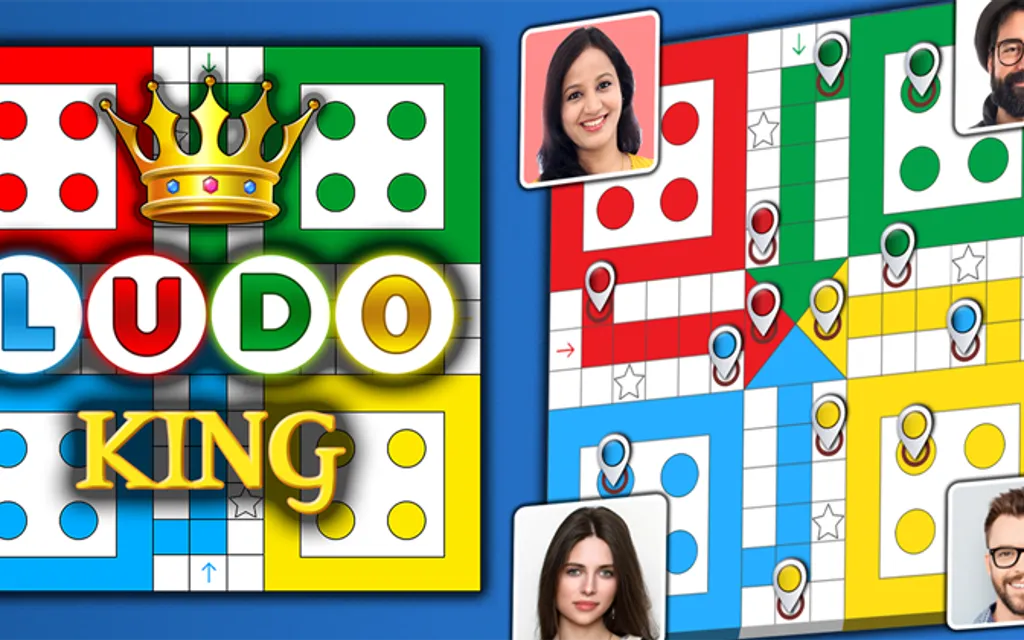
Ludo King
New Games











When evaluating mechanical foundations underlying Ludo King, casual observers often miscategorize it as simple luck-driven digital board games. Such superficial analysis completely misses deeper mathematical complexities hardcoded into engine architecture. Ludo King is not merely about rolling dice; it stands as rigorous statistical probability simulators demanding intense risk management and aggressive spatial control. Beneath bright colors and nostalgic aesthetics, core loops in Ludo King require players to actively manipulate RNG constraints, constantly calculate opponent attack ranges, and exploit safe zone geometry to establish dominance. Winning consistently in Ludo King requires abandoning reliance on luck, opting instead for calculated ruthless kill-chaining tactics designed specifically to shatter opponent pacing and reset their progression arcs completely.
Deconstructing Probability Engines
Mastering Risk Mitigation
Dice rolling mechanics define foundational RNG layers in Ludo King. Because every roll is mathematically independent, relying on specific numbers appearing exactly when needed guarantees failure. High-level strategies in Ludo King involve actively mitigating probability variance. You must always maintain multiple active tokens deployed across playing boards. Having only one active token mathematically reduces your tactical options to zero, forcing you to accept whatever suboptimal movement dice dictate.
By keeping three or four tokens active simultaneously, veteran players in Ludo King artificially expand their operational flexibility. Rolling low numbers allows players to inch trailing tokens forward defensively, while rolling high numbers empowers leading tokens to execute aggressive pushes. Spreading risk across multiple moving pieces ensures that no matter what output algorithms in Ludo King generate, players possess mathematically sound tactical responses. Maximizing option density is absolutely critical for long-term survival.
Ludo King: Tactical Engine Specs
| System Specs | Details |
|---|---|
| Developer | Gametion |
| Core Engine | Statistical RNG / Spatial Grid Simulation |
| Primary Challenge | Probability Variance & Aggressive Kill-Chaining |
| Combat Resolution | Spatial Displacement / Progression Reset |
Executing Aggressive Kill-Chaining
Weaponizing Spatial Displacement
True competitive depth in Ludo King emerges through its combat mechanics. Landing directly on spaces occupied by opponent tokens triggers immediate spatial displacement, forcefully returning enemy pieces back to their starting bases. This mechanic is not just minor setbacks; it represents catastrophic progression losses. Elite players in Ludo King do not play defensively; they actively hunt enemy tokens, weaponizing dice rolls to execute precise mathematical strikes.
Executing successful kill-chains in Ludo King requires predicting opponent movement trajectories. You must intentionally stall your own tokens just outside enemy attack ranges, patiently baiting them into moving forward first. Once enemies commit to vulnerable squares, you unleash calculated strikes. Furthermore, landing kills in Ludo King rewards players with bonus dice rolls, allowing cascading chain reactions where single lucky strikes can wipe out entire enemy squads within one turn. Mastering kill-chain momentum dictates control over entire board states.
"Biggest mistakes novices make in Ludo King involve rushing tokens toward home bases blindly. Never abandon aggressive positioning just to secure early leads. Keeping threatening tokens lingering behind enemy lines creates massive psychological pressure, forcing opponents to make mathematically terrible defensive plays."
Exploiting Safe Zone Geometry
Grid layouts in Ludo King feature designated safe zones where tokens remain completely immune to attacks. These structural nodes act as critical anchors for board control. Navigating token armies between these specific safe zones forms foundational movement doctrines. Stopping on unprotected squares in Ludo King, especially within enemy quadrants, invites absolute disaster.
Advanced tactical execution in Ludo King involves forming blockade strategies using safe zones. By stacking multiple tokens on shared safe nodes, players create impregnable walls that opponents must mathematically jump over to progress. Stacking heavily on choke points forces enemies to delay their advances, disrupting their pacing and increasing statistical likelihood they will roll sub-optimal numbers. Exploiting safe zone geometry transforms Ludo King from random dice games into intense territorial control simulators.
- Six-Roll Exploitation: Rolling sixes in Ludo King grants bonus turns. Always use bonus turns to deploy new tokens from bases first before advancing existing pieces to maximize board presence.
- Sacrificial Baiting: Intentionally leaving single tokens exposed just outside safe zones can bait overly aggressive opponents into moving their prime pieces out of defensive positions in Ludo King.
- Home Row Blocking: Keep tokens loitering near opponent home rows to establish permanent threat ranges, completely paralyzing their ability to safely secure points in Ludo King.
Psychology of Digital Board Games
Overcoming RNG Frustration
Because dice algorithms dictate movement speeds, Ludo King inherently generates immense psychological frustration during unlucky streaks. Human brains naturally fixate on negative variance, falsely perceiving algorithms as biased when opponents roll multiple sixes consecutively. Ludo King intentionally leverages this psychological friction to induce tilt, causing frustrated players to make reckless, mathematically unsound decisions.
True competitive dominance in Ludo King demands stoic emotional control. Players must accept RNG variance as immutable environmental hazards rather than personal attacks. By focusing entirely on optimizing token placement and maintaining strict safe zone discipline, veterans mitigate impact of bad dice rolls. Ludo King rewards cold, calculated statistical planning while brutally punishing emotional reactions.
A Masterclass in Tactical Simplicity
Ultimately, Ludo King proves that profound tactical depth does not require convoluted rulesets. By combining simple progression mechanics with aggressive kill-chaining and strict spatial safe zones, developers created highly competitive digital arenas. Engines in Ludo King perfectly simulate ruthless nature of territorial conflicts, demanding players balance defensive patience with explosive opportunistic aggression.
For players willing to look past its casual presentation, Ludo King offers fiercely intelligent tactical challenges. Interplay between probability management, board positioning, and psychological warfare solidifies Ludo King as elite tier entries within modern digital board game genres.