

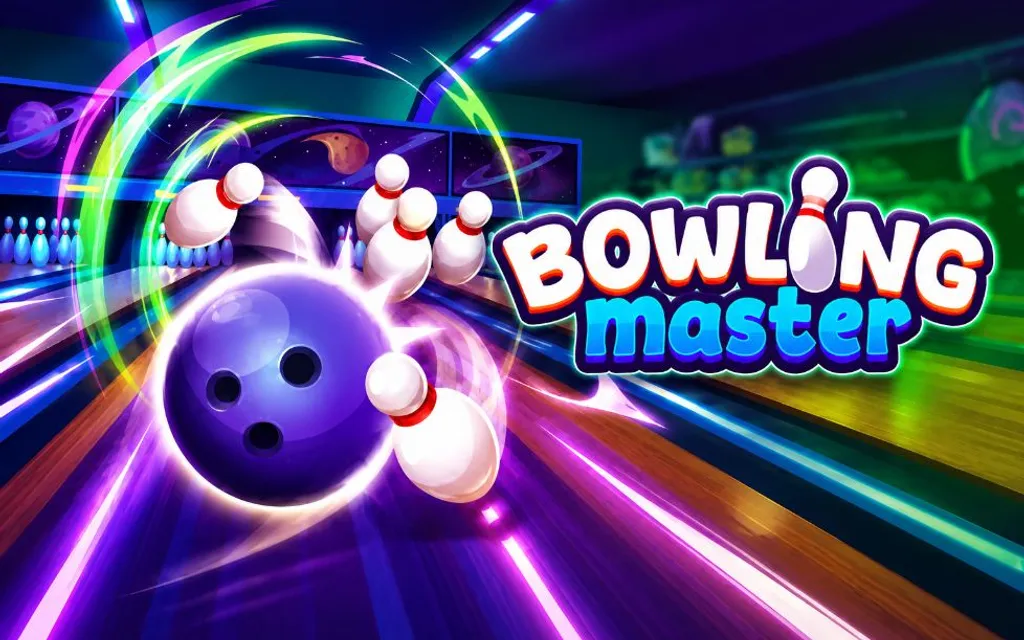
Bowling Master
New Games








The fundamental mechanic of Bowling Master transforms a casual lane sport into an exercise in high-tension survival. You are completely stripped of the traditional safety nets found in standard simulators; there are no second chances or spare pickups. The failure state is triggered instantly if a single pin remains standing after your release. Every level in Bowling Master requires absolute mathematical precision on the very first throw, making it a brilliant, nerve-wracking test of trajectory management.
Entering the High-Stakes Lane
The Single-Throw Survival Rule
When you step up to the approach in Bowling Master, the primary pressure stems from the strict survival parameters. The engine does not grant you the luxury of a practice shot to gauge the oil pattern or the pin layout. You are given one ball per stage in Bowling Master. If you fail to achieve a perfect strike, the run is immediately terminated, forcing you to restart from the beginning of the gauntlet.
This brutal mechanic means that a 99% success rate is a failure in Bowling Master. A beautifully hooked shot that shatters the pocket but leaves a stubborn 10-pin standing is treated by the engine with the exact same finality as a gutter ball. You must not only hit the correct target zone in Bowling Master, but you must hit it with enough kinetic energy to ensure total pin carry.
The psychological weight of this rule builds exponentially. Clearing the first few frames is trivial, but as you advance deeper into the stage structure in Bowling Master, the fear of making a single microscopic error begins to actively interfere with your input timing. The game demands total focus on every single release in Bowling Master.
Controlling the Spin Vectors
Throwing a straight ball is a mathematically flawed strategy for achieving consistent strikes. To survive the later levels in Bowling Master, you must master the spin mechanics. Applying rotational velocity to the ball alters its path as it travels down the lane, allowing you to bypass obstacles and enter the pin deck at a highly advantageous angle.
The physics engine in Bowling Master heavily rewards hooking the ball into the pocket. A straight shot hitting the headpin head-on often results in a split, which is a guaranteed game over under the single-throw rule. By hooking the ball in Bowling Master, you change the deflection physics, driving the pins diagonally into each other for a cascading, guaranteed clear.
"The biggest mistake rookies make in Bowling Master is ignoring the approach angle. You can't just throw hard down the middle. You have to start wide, apply the spin, and let the physics engine hook it directly into the 1-3 pocket. A straight ball is a death sentence in the later levels."
Navigating the Obstacle Gauntlet
Static and Dynamic Barriers
Unlike a standard alley, the lanes in Bowling Master are frequently littered with physical blockades. The level design introduces static walls that completely block direct paths to the pins. You are forced to utilize the spin mechanics not just for pin carry, but simply to navigate around these heavy visual obstructions in Bowling Master.
More terrifyingly, the advanced stages introduce moving hazards. Giant pendulums or sliding blocks will actively cross the lane geometry in Bowling Master. You must now calculate two distinct physics problems simultaneously: the rotational trajectory of your ball, and the timing window of the dynamic obstacle. Throwing too early or too late in Bowling Master will cause the ball to shatter against a concrete block.
- Static Walls: Require aggressive hooking trajectories in Bowling Master to bypass the physical blockade entirely.
- Moving Hazards: Demand strict temporal synchronization. The release must be timed to pass through the hazard's opening.
Non-Standard Pin Layouts
The challenge escalates as Bowling Master begins to alter the fundamental geometry of the pin deck itself. You are not always aiming at a standard ten-pin triangle. The engine will present bizarre, asymmetrical formations spread across the width of the lane. A standard pocket shot will completely miss the outer pins in these scenarios in Bowling Master.
To clear these non-standard layouts in Bowling Master, you must identify the "kingpin"—the specific pin whose physical displacement will trigger a chain reaction knocking down the rest. Hitting the wrong pin first will break the kinetic chain, leaving isolated survivors on the deck. Pin-targeting in Bowling Master becomes a complex physics puzzle.
- Asymmetrical Spreads: Require finding the exact impact point that maximizes diagonal deflection in Bowling Master.
- Split Formations: Demand utilizing the lane walls to bounce the ball, or extreme spin to clip the edges.
The Physics of Kinetic Energy
Managing Release Velocity
Power is a critical variable in the Bowling Master physics equation. A slow-rolling ball simply will not generate enough kinetic energy to knock down a heavy cluster of pins, often resulting in weak hits where a pin simply wobbles and remains upright. You must maximize your release velocity in Bowling Master to ensure total devastation upon impact.
However, throwing at maximum power in Bowling Master significantly reduces the amount of time the ball spends on the lane, which directly reduces the effectiveness of your spin. A fast ball will not hook as sharply as a slow ball. You must strike a delicate balance in Bowling Master, applying enough speed to carry the pins, but leaving enough time for the curve to actually develop before impact.
If you are facing a layout protected by a wide static wall in Bowling Master, you are forced to throw a slower, high-spin shot to wrap around the barrier. You trade kinetic impact for trajectory manipulation, hoping the angle alone is enough to clear the deck in Bowling Master.
The Threat of Over-Correction
The touch controls require precise finger swiping to determine the ball's path. The engine is highly sensitive to microscopic changes in input angle in Bowling Master. Attempting to apply a massive hook to bypass a hazard often results in over-rotation, driving the ball directly into the gutter before it even reaches the halfway point of the lane.
Over-correction is the leading cause of failed runs. When the pressure is high in Bowling Master, players tend to swipe aggressively, completely throwing off their established muscle memory. You must maintain a smooth, consistent release cadence in Bowling Master, trusting the physics engine to carry out the trajectory rather than forcing it with panicked inputs.
Analyzing the Visual Indicators
Reading the Approach Geometry
Before initiating your throw in Bowling Master, you can adjust your starting position on the approach area. Moving left or right alters the launch vector significantly. If you are trying to execute a massive left-to-right hook, starting from the far right edge of the approach is a geometric necessity in Bowling Master.
You must visually line up the starting position with your intended breakpoint—the exact spot on the lane where the ball will begin its hook phase. Misaligning this geometry by a few pixels in Bowling Master will cause the ball to enter the pin deck at the wrong angle, inevitably leaving a 7-pin or 10-pin standing, triggering the failure state instantly.
| System Specs | Details |
|---|---|
| Developer | Famobi |
| Release Year | 2023 |
| Genre | Precision Sports |
| Core Interaction | Trajectory & Velocity Calculation |
Adapting to the Oil Patterns
While not explicitly visible as a UI element, the behavior of the ball in Bowling Master implies varying friction coefficients across different stages. Some lanes will cause your ball to hook violently the moment you release it, while others will allow it to slide straight for much longer before the spin grips the surface.
Because you only have one throw, you cannot rely on trial and error to gauge the lane friction in Bowling Master. You must carefully observe the first few feet of the ball's travel. If it begins to drift off the center line immediately in Bowling Master, the friction is high, and you must apply less rotational input on subsequent, similarly designed levels.