

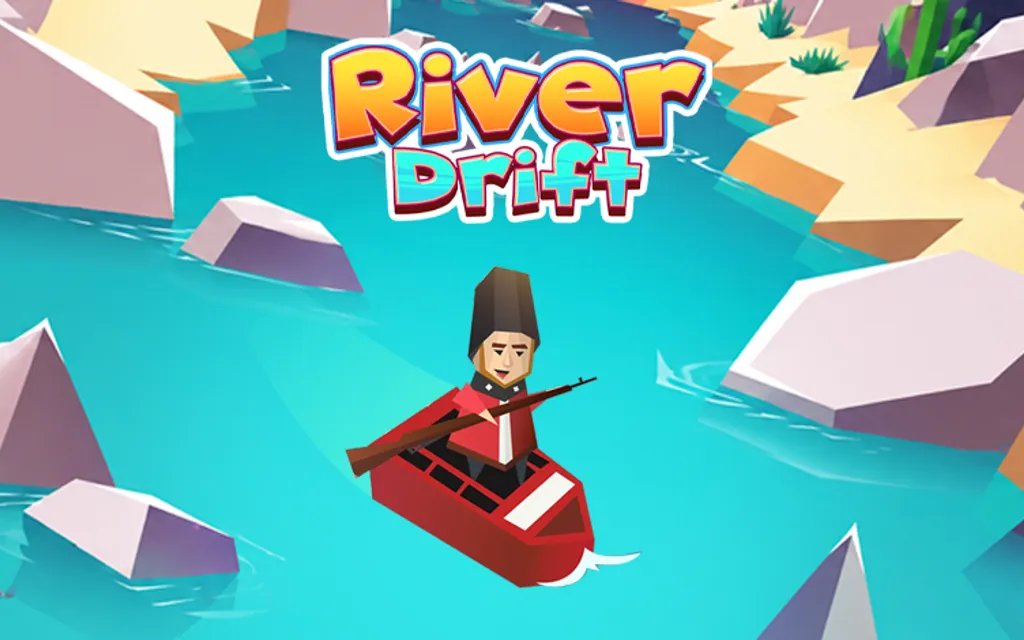
River Drift
New Games












When evaluating endless runner architectures, casual audiences frequently dismiss them as simplistic mobile distractions relying purely on random swiping. River Drift forcefully rejects these dismissive notions by implementing mathematically rigorous procedural generation engines intertwined with punishing fluid dynamics. Surviving long distances inside River Drift is not merely about testing basic reflex speeds; survival requires advanced spatial planning, deep understanding regarding algorithmic obstacle generation, and precise kinetic momentum control. Players must navigate infinitely scrolling aquatic environments where exponential difficulty scaling guarantees eventual failure. Playing River Drift effectively demands stoic emotional control, forcing human brains to process complex visual collision data while wrestling against constantly increasing current velocities designed specifically to overwhelm sensory bandwidth limits.
Deconstructing Procedural Water Engines
Mastering Fluid Dynamics Simulation
Unlike rigid asphalt runners, River Drift utilizes dynamic fluid momentum variables. Boats do not snap instantly between predefined lanes. Instead, steering inputs apply lateral force against continuous forward water currents. This creates inherent input latency. Turning too sharply causes digital boats to slide outward due to simulated aquatic friction loss. Mastering traversal in River Drift requires players to anticipate turns seconds before actual obstacles appear on screen.
Executing perfect evasive maneuvers demands smooth, continuous steering inputs rather than panicked jerks. Because water currents naturally push boats toward outer banks during corners, players must intentionally cut inside apexes early. Understanding how simulated water tension interacts with hull shapes separates decent players from absolute distance record holders inside River Drift.
Analyzing Procedural Threat Scaling
Engines powering River Drift rely on procedural chunk generation. However, algorithms do not spawn obstacles randomly. As distance metrics increase, internal difficulty directors actively reduce safe navigable geometry. Early stages feature wide straights populated by scattered logs. Deep runs introduce narrow winding canyons filled with moving whirlpools and jagged rock formations. River Drift actively tightens physical margins for error exponentially.
High-level routing involves pattern recognition. While layouts generate procedurally, algorithms piece together predetermined geometric chunks. Veterans of River Drift memorize these specific chunk configurations instantly upon rendering. Recognizing complex "S-curve with whirlpool" patterns allows players to preemptively execute specific steering macro-commands, entirely bypassing reactionary processing phases that cost crucial milliseconds during extreme velocity states.
River Drift: Tactical Engine Specs
| System Specs | Details |
|---|---|
| Developer | Azgames |
| Core Engine | Procedural Endless Generation / Fluid Movement |
| Primary Challenge | Exponential Velocity Scaling & Collision Avoidance |
| Failure State | Absolute Hull Integrity Loss |
Executing High-Velocity Protocols
Exploiting Peripheral Viewports
Visual processing determines ultimate survival limits. At extreme speeds, focusing on immediate foreground obstacles guarantees destruction. River Drift mathematically forces players to elevate their gaze toward extreme top edges of rendering viewports. By analyzing distant pixel clusters before fully forming into solid rocks, human brains can calculate optimal trajectory angles milliseconds earlier.
This technique requires trusting peripheral vision entirely to handle immediate foreground dodging. Elite players treat River Drift as stereoscopic logic puzzles. While central focus remains locked on distant procedural generation horizons, subconscious muscle memory handles close-quarters lateral sliding. Disconnecting central vision from immediate threats constitutes foundational survival mechanics required for deep runs.
"Biggest mistakes novices make in River Drift involve over-correcting steering inputs after dodging narrow hazards. Over-steering instantly kills lateral momentum, causing boats to fishtail wildly into opposite riverbanks. Always utilize minimal essential inputs necessary to clear obstacles."
Managing Risk Reward Scenarios
Scattered throughout treacherous waters are valuable collectible items. These collectibles often spawn along highly dangerous geometric paths. Engines in River Drift intentionally place rewards directly behind lethal rock formations, forcing players into making microsecond risk-reward calculations. Greed acts as primary executioners during late-game stages.
Advanced tactical execution demands extreme logistical discipline. You must completely ignore collectibles positioned along outer curves when approaching high-speed hairpins. Sacrificing perfect central racing lines just to grab floating coins guarantees subsequent catastrophic wall collisions. River Drift brutally punishes players who prioritize short-term resource gathering over maintaining optimal safe trajectories.
- Whirlpool Slingshots: Brush outer edges of whirlpools intentionally. Centrifugal forces apply sudden lateral speed boosts, allowing skilled players to bypass dense rock clusters rapidly inside River Drift.
- Bank Bouncing: Hitting muddy riverbanks at extremely shallow angles does not cause instant death. Use shallow bank bumps to emergency-correct bad entry trajectories when absolutely necessary.
- Visual Filtering: Ignore animated water splashes entirely. Graphic effects generate visual noise designed specifically to distract processing centers away from solid collision hitboxes in River Drift.
Psychology of Infinite Escalation
Overcoming Speed Induced Panic
Because River Drift features zero finish lines, engines guarantee eventual player death. As velocity variables scale infinitely upward, cognitive processing buffers eventually overflow. Recognizing this inevitable failure state frequently induces subconscious panic. Players begin gripping controls tighter, holding breath unnecessarily, and making rigid, jerky movements leading directly toward failure.
True competitive dominance demands stoic emotional detachment. Players must accept eventual destruction as immutable mathematical facts. By focusing entirely on maintaining fluid steering rhythms and ignoring escalating speed metrics, veterans mitigate panic impact. River Drift rewards cold, calculating spatial planning while brutally punishing emotional tension.
A Masterclass in Evasion Endurance
Ultimately, River Drift proves that profound mechanical depth thrives within conceptually simple endless frameworks. By combining fluid dynamic steering constraints with aggressive procedural obstacle generation, developers created highly compelling digital gauntlets. Engines in River Drift perfectly simulate ruthless nature of aquatic rapids, demanding players balance precise lateral movements with extreme forward visual anticipation.
For players seeking pure reflex challenges demanding zero narrative distractions, River Drift offers fiercely intelligent execution tests. Interplay between simulated water friction, dynamic chunk rendering, and strict visual discipline solidifies River Drift as elite tier entries within modern browser-based arcade genres.