


Five Nights at Hyun's Dojo
New Games

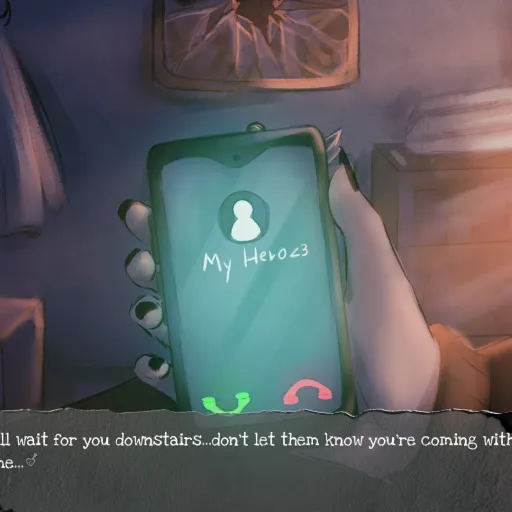










The core survival loop in Five Nights at Hyun's Dojo completely rejects the standard jump-scare reliance of typical horror games, opting instead for a brutal lesson in resource management. You are locked in a defenseless office, entirely dependent on a finite pool of electrical energy. The failure state in Five Nights at Hyun's Dojo is triggered not just by physical attacks, but by your own systemic mismanagement of the dojo server and the camera feeds. Surviving until 6 AM requires calculating every single watt of power you consume against the escalating aggression of the AI.
Entering the Creepy Dojo Atmosphere
The Mechanics of the server in Five Nights at Hyun's Dojo Hub
When your shift begins in Five Nights at Hyun's Dojo, your primary interface is the central dojo server network. This is not a passive viewing tool; it is a highly active defense mechanism. You must constantly flip through the security cameras to track the spatial positioning of the hostile entities roaming the facility. However, actively viewing the monitor in Five Nights at Hyun's Dojo drains your battery in Five Nights at Hyun's Dojo reserves at a rapid pace.
The psychological pressure builds because you cannot leave the camera feed active indefinitely. You are forced into a rhythm of flashing the cameras on, identifying the immediate threats, and immediately cutting the feed to preserve power. This visual deprivation in Five Nights at Hyun's Dojo creates an intense feeling of paranoia, as the entities only move when you are not actively observing them.
Furthermore, the server in Five Nights at Hyun's Dojo system itself is prone to malicious interference. Specific entities in Five Nights at Hyun's Dojo are designed to sabotage your equipment, disabling audio cues or freezing the camera lenses. When the system is compromised, you must reboot the dojo server manually, a process that leaves you entirely blind and highly vulnerable to a flank attack for several agonizing seconds.
Managing the Energy Economy
Every defensive action you take carries a strict energetic cost. Closing the heavy blast doors to seal off the office is your ultimate defense mechanism in Five Nights at Hyun's Dojo, but keeping a door shut burns through your battery in Five Nights at Hyun's Dojo capacity exponentially. You cannot simply lock down the room and wait out the clock. the engine of Five Nights at Hyun's Dojo forces you to open the doors the exact second the threat has passed.
Five Nights at Hyun's Dojo demands absolute temporal precision. If an entity is approaching down the left hallway in Five Nights at Hyun's Dojo, you must use the hall lights to confirm their presence before slamming the door. Over-using the lights or leaving a door closed for an extra three seconds can be the mathematical difference between surviving the night and triggering a total blackout.
"The rookie mistake in Five Nights at Hyun's Dojo is staring at the cameras for too long. The cameras don't protect you; the doors do. Only use the server in Five Nights at Hyun's Dojo to check the two adjacent rooms and the main stage. If you are tracking a character on the other side of the building, you are wasting power for zero tactical gain."
Understanding the Defenselessness
Distinct AI Behaviors
The enemies in Five Nights at Hyun's Dojo do not share a universal pathfinding algorithm. Each character operates on a unique behavioral logic. Some entities are extremely aggressive but follow a predictable, linear path toward your office. Others are opportunistic, waiting in the shadows until you are distracted by a server reboot before launching a rapid assault.
To survive the later stages in Five Nights at Hyun's Dojo, you must memorize these individual AI profiles. For example, a specific character might only attack when the audio levels in the building drop too low, forcing you to intentionally trigger noise-making devices to keep them at bay. Understanding these distinct triggers is mandatory, as treating every threat identically will inevitably result in a breach in Five Nights at Hyun's Dojo.
- Linear Stalkers: Move predictably from room to room, requiring standard door management in Five Nights at Hyun's Dojo.
- Saboteurs: Attack the server in Five Nights at Hyun's Dojo infrastructure, forcing blind reboots and disrupting your visual telemetry.
The Auditory Threat System
Because visual information is heavily restricted by the power mechanics, audio becomes your primary survival tool. Five Nights at Hyun's Dojo features a deeply layered soundscape where every footstep, metallic clank, or distorted breathing noise provides crucial spatial data. A heavy thud in the left hallway tells you exactly where to focus your attention without spending battery power on the camera feed.
However, Five Nights at Hyun's Dojo actively attempts to mask these critical cues. Ambient noise, server hums, and deliberate auditory hallucinations are designed to drown out the approaching footsteps. You must develop a highly trained ear to filter out the background noise and isolate the specific sounds of impending death in Five Nights at Hyun's Dojo. Playing this game without stereo headphones is a severe tactical disadvantage.
- Footsteps: Indicate the speed and direction of an approaching entity.
- Ventilation Noises: Signal that an enemy is bypassing the main hallways entirely in Five Nights at Hyun's Dojo.
The Pressure of the Chase
Surviving the Total Blackout
If you mismanage your energy economy and the battery hits zero before 6 AM, the entire facility powers down. The doors automatically open, the cameras die, and the lights shatter. In Five Nights at Hyun's Dojo, a total blackout is not an immediate game over, but rather an agonizingly tense execution sequence. You are plunged into total darkness, completely helpless.
During this phase, you must remain absolutely still while the primary hostile entity begins its final approach. Five Nights at Hyun's Dojo plays a prolonged, terrifying music box sequence in Five Nights at Hyun's Dojo. If the clock strikes 6 AM during this sequence, you survive. If the music stops before the clock rolls over, the jump-scare executes. The blackout phase is purely a test of mathematical luck based on how close you were to the end of the shift.
| System Specs | Details |
|---|---|
| Developer | Shuriken 225 / Fordz |
| Release Year | 2015 |
| Genre | Survival Horror |
| Core Interaction | Energy & Server Management |
Escalating Difficulty Curves
The aggression of the AI is not static. As you progress from Night 1 to Night 5, the internal difficulty modifiers in Five Nights at Hyun's Dojo spike dramatically. Entities that previously took hours of in-game time to reach your office will now appear at your door within seconds. The grace period for reacting to a threat shrinks to a fraction of a second.
This escalation forces you to abandon cautious strategies in favor of hyper-optimized mechanical reflexes. By the final nights, you are no longer playing a horror game; you are executing a rigid sequence of clicks and door slams with robotic precision. Surviving the ultimate challenge in Five Nights at Hyun's Dojo requires complete mastery over Five Nights at Hyun's Dojo's strict timing windows.
Frequently Asked Questions about Five Nights at Hyun's Dojo
Why did the server in Five Nights at Hyun's Dojo suddenly go offline when I wasn't even looking at the cameras in Five Nights at Hyun's Dojo?▼
How do I stop the entity that moves through the ventilation shafts?▼
Looking for more frights? Browse our scary games online for the full horror collection.